

By Lustre Look Advanced Aesthetics
How Laser and Energy-Based Skin Treatments Differ
Beautiful, healthy-looking skin is not just about skincare products. Advances in aesthetic technology have made it possible to address a wide range of skin concerns, from fine lines and wrinkles to pigmentation, uneven texture, sun damage, and loss of firmness.
Today, several laser and energy-based treatments offer ways to rejuvenate the skin, stimulate collagen production, and improve overall skin appearance.
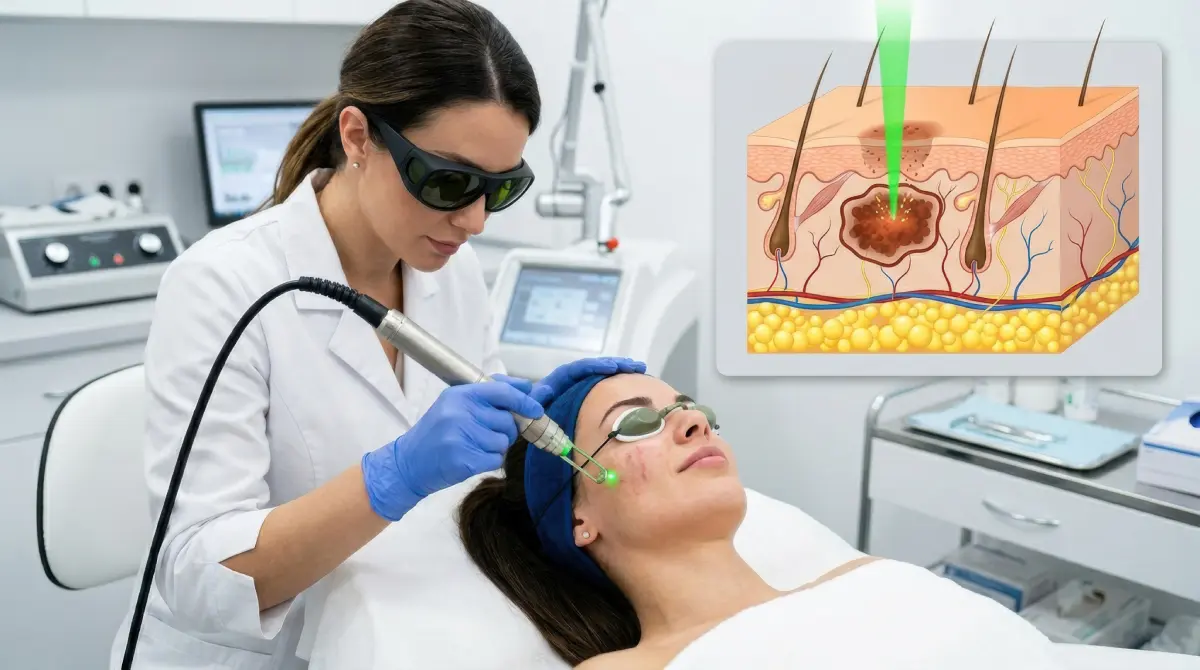
However, not all technologies work the same way. Each treatment uses a different type of energy, targets different structures within the skin, and offers different benefits.
At LUSTRELOOK Advanced Aesthetics, we believe that understanding these technologies is the first step toward making informed decisions about your skin. Our laser skin treatments use the CUTERA enLIGHTen III platform, with treatment planning based on your concerns and suitability.
Let’s explore four popular skin rejuvenation technologies: radiofrequency (RF), intense pulsed light (IPL), CO₂ laser, and picosecond laser. This comparison is educational and does not mean that LUSTRELOOK offers all four technologies.
1. Radiofrequency (RF): Skin Tightening and Collagen Stimulation
Non-invasive radiofrequency treatments are designed to improve skin firmness and address signs of aging.
Unlike lasers, RF uses high-frequency electrical energy to generate controlled heat within the skin. This section focuses on non-invasive RF skin tightening; RF microneedling is a different procedure with different risks and recovery expectations.
How Does RF Work?
RF energy heats tissue, encouraging collagen remodeling and stimulating collagen production.
Collagen and elastin help maintain skin structure, firmness, and elasticity. As the skin responds to treatment, it may gradually appear firmer and smoother.
The American Society for Dermatologic Surgery explains how non-invasive skin tightening treatments use energy, including radiofrequency, to heat tissue and stimulate collagen production. Results and the number of treatments vary.
Potential Benefits
- Improves the appearance of mild skin laxity.
- Helps reduce the appearance of fine lines.
- Supports collagen remodeling.
- Helps improve skin firmness.
- May improve overall skin texture.
Common Treatment Areas
- Face and cheeks.
- Jawline.
- Neck.
- Other areas experiencing mild skin laxity.
Downtime
Non-invasive RF treatments often involve limited downtime. Temporary redness, swelling, warmth, or bruising may occur, depending on the device and treatment.
Your provider should explain the risks, expected recovery, and number of sessions for the specific procedure.
May suit: Individuals looking to address mild skin laxity and achieve gradual improvements in firmness.
2. IPL (Intense Pulsed Light): Improving Pigmentation and Skin Clarity
IPL stands for intense pulsed light. Although commonly grouped with laser treatments, IPL uses broad-spectrum light rather than a laser beam.
It may be used to address selected pigmentation concerns and visible redness.
How Does IPL Work?
IPL delivers pulses of broad-spectrum light through filters selected for the treatment. The light is absorbed by targets in the skin, including melanin, the pigment that gives skin its color, and hemoglobin in blood vessels.
Depending on the device and treatment plan, IPL may help improve the appearance of:
- Sun damage.
- Brown spots and age spots.
- Uneven skin tone.
- Certain types of redness.
- Visible superficial blood vessels.
The American Society for Dermatologic Surgery's hyperpigmentation guidance explains that IPL and lasers may be considered for some pigmentation concerns after assessment of the underlying cause.
Potential Benefits
- Helps reduce the appearance of sun damage.
- Helps fade selected brown spots.
- Improves uneven pigmentation.
- Reduces certain types of redness.
- Supports a more even-looking complexion.
Common Treatment Areas
- Face.
- Neck.
- Chest and décolletage.
- Hands.
Downtime
Downtime is generally limited, but temporary redness, swelling, and darkening of treated spots may occur.
IPL requires careful assessment of skin tone and pigmentation risk. The appropriate treatment depends on the concern, device, settings, and individual skin characteristics.
May suit: Individuals concerned about sun damage, brown spots, uneven skin tone, or selected types of superficial redness.
3. CO₂ Laser: Advanced Skin Resurfacing and Texture Renewal
CO₂ laser resurfacing is used to improve skin texture, wrinkles, and selected signs of skin damage.
It is an ablative laser technology, meaning that it removes targeted skin tissue. CO₂ lasers typically operate at a wavelength of 10,600 nm.
How Does CO₂ Laser Work?
CO₂ laser energy is absorbed by water in the skin, allowing controlled removal of targeted tissue. This triggers healing and remodeling processes that can improve skin texture.
Fractional CO₂ treatment creates microscopic treatment zones while leaving areas of surrounding tissue intact. Fully ablative treatment treats the surface more extensively.
The American Society of Plastic Surgeons describes how CO₂ laser resurfacing removes thin layers of skin as part of the resurfacing process.
Potential Benefits
- Improves the appearance of wrinkles.
- Addresses uneven skin texture.
- Reduces the appearance of certain scars.
- Improves skin roughness.
- Helps reduce selected signs of sun damage.
- Supports collagen remodeling.
Common Treatment Areas
- Face.
- Around the mouth.
- Areas with wrinkles.
- Selected acne scars.
- Sun-damaged skin.
Downtime
CO₂ laser resurfacing generally involves more recovery than non-invasive RF or IPL.
Recovery may include redness, swelling, peeling, crusting, and sensitivity. The duration depends on whether treatment is fractional or fully ablative, its intensity, the area treated, and the individual's healing response.
May suit: Individuals seeking resurfacing for wrinkles, texture changes, or certain scars who can accommodate the associated recovery.
4. Picosecond Laser: Advanced Pigmentation and Skin Rejuvenation
Picosecond lasers deliver extremely short pulses of energy, measured in trillionths of a second.
These short pulses can create a photoacoustic effect that helps break targeted pigment into smaller particles. The body then gradually clears the fragmented pigment.
How Does Pico Laser Work?
Picosecond treatment uses wavelengths and settings selected for the pigment and skin being treated.
Depending on the device, attachment, and treatment settings, the platform may also support skin remodeling. Pigment treatment and fractional treatment for texture or scars are different approaches, even when they use the same laser platform.
CUTERA's enLIGHTen technology combines multiple wavelengths and picosecond and nanosecond pulse durations. Its Micro Lens Array attachment provides a fractional approach for selected acne-scar treatments.
Potential Benefits
- Addresses selected unwanted pigmentation.
- Helps improve the appearance of sunspots and certain age spots.
- Treats appropriate benign pigmented lesions.
- Can improve selected acne scars using an appropriate protocol.
- May help refine skin texture.
- Supports skin remodeling with suitable treatment settings.
At LUSTRELOOK, Pico Genesis skin rejuvenation and acne scar treatment address different concerns. Bonnie assesses pigment, scar texture, and your skin before recommending an approach.
Common Treatment Areas and Concerns
- Face.
- Areas with selected unwanted pigmentation.
- Appropriate acne scars.
- Uneven skin tone and texture.
- Unwanted tattoo pigment.
Tattoo treatment has its own planning considerations. LUSTRELOOK provides separate information about body tattoo removal and brow and permanent makeup removal, since the pigment, treatment area, and previous procedures can affect the approach.
Downtime
Some picosecond treatments involve limited downtime compared with ablative resurfacing. Recovery can differ between pigment-targeting, fractional, and tattoo-removal procedures.
Temporary redness, swelling, or darkening of targeted pigment may occur. Your provider should explain the likely response and aftercare for the specific treatment.
May suit: Individuals seeking treatment for selected pigmentation concerns, unwanted tattoo pigment, or appropriate skin-texture concerns following assessment.
Comparing the Four Technologies: Which One Does What?
Every technology has a different purpose. Understanding these differences helps explain why one treatment may be more appropriate than another.
| Technology | Main Focus | General Recovery Considerations |
|---|---|---|
| Non-invasive radiofrequency (RF) | Mild skin laxity and collagen remodeling | Often limited downtime; temporary redness or swelling may occur |
| IPL | Selected pigmentation, sun damage, and redness | Often limited downtime; treated spots may temporarily darken |
| CO₂ laser | Resurfacing, wrinkles, and selected scars | Typically more recovery; varies with fractional or fully ablative treatment |
| Picosecond laser | Selected pigmentation, tattoo pigment, and skin remodeling | Varies with the treatment, attachment, settings, and concern |
These are broad comparisons. Recovery and results depend on the specific procedure and individual skin response.
Are These Treatments Suitable for All Skin Types?
Not necessarily. Skin tone and pigmentation risk are important considerations when planning aesthetic treatment.
- RF: Non-invasive RF can be considered across a range of skin tones, but suitability depends on the device and individual assessment.
- IPL: Requires careful assessment because some skin tones have a greater risk of unwanted pigmentation changes.
- CO₂ laser: Requires careful planning, particularly for people prone to post-inflammatory pigmentation changes.
- Picosecond laser: Suitability depends on the wavelength, treatment application, settings, and individual skin characteristics.
The American Society of Plastic Surgeons notes that laser resurfacing candidates need assessment of their skin and pigmentation risk, particularly when considering resurfacing in darker skin tones.
A device's general capabilities do not mean that every treatment is offered to every skin type at a particular practice. At LUSTRELOOK, laser pigmentation treatments are not offered for melasma or Fitzpatrick skin types V–VI.
The appropriate treatment should be determined following an assessment of your skin, concerns, medical history, and goals.
Can Different Technologies Be Combined?
In some cases, different aesthetic technologies can complement one another.
For example:
- RF may be considered for skin firmness and collagen stimulation.
- IPL may address superficial pigmentation and selected redness.
- CO₂ laser may target more significant textural concerns.
- Picosecond laser may be considered for selected pigmentation concerns and skin rejuvenation.
A carefully planned approach may address multiple skin concerns over time.
However, combining treatments is not appropriate for everyone. Treatment timing, skin recovery, and individual risk factors must be considered. This discussion describes general treatment possibilities, rather than a combination-treatment package offered by LUSTRELOOK.
How Do You Choose the Right Treatment?
There is no single treatment that is best for everyone. The appropriate technology depends on what you want to improve:
- Concerned about loose or less-firm skin? Non-invasive RF may be worth discussing with a qualified provider.
- Noticing brown spots, sun damage, or redness? IPL may be an option after assessment.
- Concerned about wrinkles, uneven texture, or acne scars? CO₂ resurfacing may be considered, depending on your skin and recovery preferences.
- Looking to address unwanted pigmentation or selected texture concerns? Picosecond treatment may be suitable following evaluation.
The most effective approach begins with understanding your skin rather than simply choosing the latest technology.
Your Skin Deserves a Personalized Approach
Modern aesthetic technology offers opportunities for skin rejuvenation, but treatment begins with the right assessment and realistic expectations.
At LUSTRELOOK Advanced Aesthetics, our philosophy centers on understanding individual skin concerns and selecting an appropriate approach using the CUTERA enLIGHTen III platform.
Whether your concern is pigmentation, texture, scarring, or unwanted tattoo pigment, understanding your options can help you make informed decisions.
Request a consultation with LUSTRELOOK to discuss your concerns and find out which available treatment may be appropriate for you.
Frequently Asked Questions
IPL uses broad-spectrum light delivered through filters, while lasers use specific wavelengths. They target different concerns, so the appropriate option depends on your skin, treatment goals, and individual assessment.
No. Radiofrequency uses electrical energy to generate heat, while IPL uses broad-spectrum light. CO₂ and picosecond devices are laser technologies.
Downtime depends on the device, settings, treatment area, and your skin's response. Non-invasive RF, IPL, and some picosecond treatments generally involve less recovery than ablative CO₂ resurfacing. Your provider should explain the expected recovery for your specific treatment.
Picosecond laser platforms can offer different approaches for selected pigmentation concerns and acne scars. These concerns may require different attachments, settings, and treatment plans, even when the same platform is used.
This article compares technologies for educational purposes and does not represent a list of services offered at LUSTRELOOK. Bonnie uses the CUTERA enLIGHTen III platform. During your consultation, she can explain which available treatments may suit your concerns.
Disclaimer: This article is intended for educational purposes only and does not replace professional medical advice or an individualized skin assessment. Results, risks, and recovery times vary depending on the technology, treatment settings, skin type, and individual circumstances.